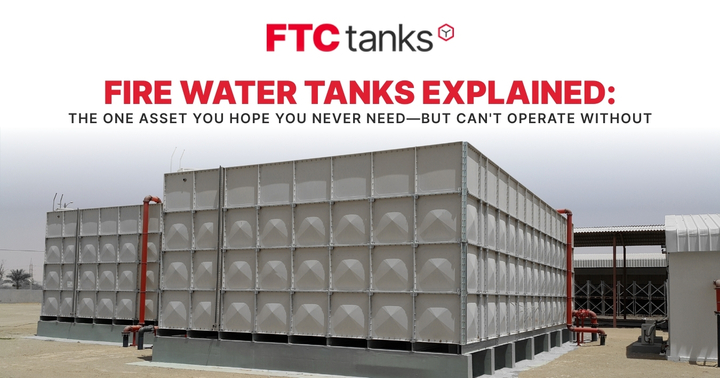
In construction, there are assets you admire every day, and there are assets you pray you never have to use. Fire protection sits firmly in the second group. Yet it is the backbone of safe industrial sites, commercial structures, and high-risk facilities. At the center of that system is the fire water tank. It stands quietly in the background, storing the one resource that can stop a disaster in its tracks.
Contractors, engineers, and project planners know that a structure is only as safe as its weakest link. Poor planning in fire protection can cause heavy delays, failed inspections, and real danger. That is why teams now pay far more attention to fire water tank variations during the design stage. The choice you make affects capacity, compliance, long-term cost, and system performance. It is not an afterthought. It is a technical decision that shapes the entire life of the facility.
Below is a clear, practical guide to help engineers and contractors understand these water tanks, compare material choices, and see why FRP tanks often rise as the most reliable option for modern sites.
Why a Fire Water Tank is a Must-Have in Industrial and Commercial Construction
A fire protection system is useless without a controlled and consistent water supply. Municipal lines alone cannot guarantee the needed flow and pressure during an emergency. Many industrial sites also sit in remote zones where city water is limited. This is why a dedicated fire water tank is essential. It stores reserved water that supports pumps, hydrants, sprinklers, and standpipe systems.
NFPA standards outline minimum storage requirements based on hazard levels, building use, occupancy, and pump size. An NFPA water tank must meet strict capacity rules and must be installed in a way that supports the entire fire system. When the fire water tank fails, the whole site fails.
Most construction teams also lean on these NSF certified water tanks for redundancy. They provide stability in moments when the main supply line cannot keep up. In short, fire water storage is not a luxury. It is a vital risk management tool.
Understanding Fire Water Storage and Its Role in System Performance
Every engineer knows that fire events drain water fast. Pumps pull massive volumes in short bursts. Without a stable supply, pressure collapses. Sprinklers lose reach. Hydrants lose force. That is why storage design is so important.
An NFPA water tank helps the system maintain:
- Flow stability
- High discharge duration
- Reliable pump suction
- Autonomy in remote areas
- Compliance with inspection requirements
These technical points guide early planning stages. They also shape the material and design approach for the FRP water tank itself.
Fire Water Tank Variations Contractors Must Review
Material choice is the biggest factor when choosing a tank. There are several fire water tank variations, each with different strengths and limits. Most fall into four main categories: steel, concrete, poly, and FRP.
Below is a clear comparison of teams making decisions in the field.
Material Comparison Table
| Tank Type | Pros | Cons | Best Use Case |
| Steel | Strong structure | Risk of corrosion | Hot industrial zones |
| Concrete | Long lifespan | High labor cost | Permanent heavy facilities |
| Poly | Light and simple | Limited volume | Small or rural sites |
| FRP | Corrosion-resistant, light, scalable | Higher upfront cost | Large commercial and industrial systems |
This is where many teams start noticing the benefits of an FRP water tank. It offers strength without added weight, high resistance to chemicals, and lower long-term maintenance than other types.
Why FRP Tanks Lead the Industry in Reliability
FRP tanks are made from fiberglass-reinforced plastic. This composite resists corrosion far better than metal and does not crack like concrete under stress. Industrial sites expose water tanks to toxic elements, pressure variations, and constant heat and cold cycles. FRP handles these conditions with ease.
Installation is also much faster. FRP is lightweight compared to steel and concrete. Teams spend less time preparing the base, lifting the structure, and performing site adjustments. This saves labor costs and keeps the schedule on track.
More engineers choose FRP tanks because they reduce long-term risk. A fire water tank that resists corrosion and chemical attack can serve for decades with little maintenance.
How Engineers Size and Specify a Fire Water Tank
Correct sizing depends on risk level, sprinkler density, pump capacity, and refill options. Engineers calculate peak demand and required duration. They also review soil type, climate, seismic range, and wind exposure.
Technical specs often include:
- Material choice
- Tank height and width
- Access manways
- Level sensors
- Outlet & inlet size
- Vents and ladders
All these elements must align with NFPA guidance. Oversights can lead to delayed permits or failed inspections. That is why teams often select FRP tanks for consistency and ease of customization.
What Contractors Should Plan for During Installation
Site preparation matters. A fire water tank needs a firm, level base. Soil testing is key before installation. Heavy materials like concrete need reinforced pads. FRP units require far less reinforcement, which saves budget and time.
Logistics also demand attention. Cranes, lifts, and crew access must be coordinated. An FRP water tank allows for smaller equipment because of its lightweight. This helps contractors avoid schedule delays.
A structured installation plan improves safety and keeps the project moving without stress.
Maintenance: The Step That Protects the Entire System
Maintenance is often ignored during the design stage. Yet it is one of the most important parts of owning water storage tanks. Early planning prevents leaks, pressure drops, and pump failures.
Routine checks include:
- Seam inspection
- Valve checks
- Level sensor testing
- Vent clearance
- Overflow checks
Maintenance needs vary by material. Here is a quick comparison.
Maintenance Cost Table
| Tank Type | Maintenance Needs | Cost Impact |
| Steel | Corrosion treatment | High |
| Concrete | Crack repair | Moderate |
| Poly | UV check | Low |
| FRP | Minimal care | Very low |
This is another reason the FRP water tank is trusted in long-term industrial operations.
Choosing the Right Tank Partner
Contractors need suppliers who understand fire standards, site demands, soil behavior, and industrial compliance. A good partner should offer technical drawings, stress analysis, and material certifications.
Mistakes to avoid include buying undersized water tanks, skipping NFPA reviews, choosing poor hardware, or ignoring site soil load. Early consultation can prevent major issues later in construction.
Final Word: The Tank You Hope You Never Need, Yet Cannot Ignore
In the construction world, you plan for risks with precision and discipline. The fire water tank sits at the heart of that plan. It protects workers, assets, and structures. It supports pump performance. It meets inspection standards. Most of all, it stands ready for the moment when nothing else matters but water.
When you choose a tank that can withstand decades of harsh use, you protect your entire project. This is why FRP tanks continue to lead the industry. Strong, reliable, corrosion-resistant, and consistent, it gives engineers and contractors the confidence they need.If your next project demands fire-safe storage that stands up to code and field pressure, consider reviewing FTC Tanks’ options. The right fire water tank today can protect everything you build tomorrow.