Fire is a problem that spreads in seconds. It destroys equipment, stops operations, and puts teams in danger. For remote sites and industrial parks, the risk is higher. These locations often sit far from municipal water lines. Response teams may take a long time to arrive. When that happens, one thing decides the outcome: your fire water tank.
A reliable cistern is not just a requirement. It is an essential part of site resilience. And this is where FRP tanks are changing the game.
Why Fire Water Storage Must Be Rock-Solid
Every engineer knows the rule: the suppression system is only as strong as its water source. If the tank fails, pressure drops. If pressure drops, your fire plan collapses.
Industrial sites face harsh conditions. Steel water tanks corrode. Concrete cracks. Coatings peel. A tank that looks fine today may weaken tomorrow. Many failures go unnoticed until an emergency exposes them. By then, it is too late.
A compliant fire water tank must keep its volume stable, protect water quality, and stay structurally sound year-round. This makes material choice critical.
FRP Tanks: Modern, Tough, and Built for Harsh Sites
FRP tanks (a.k.a. fiberglass-reinforced plastic tanks) have become a preferred choice across construction, utilities, manufacturing, and energy projects. Their advantage is simple: they stay strong where traditional water tanks fail.
FRP uses engineered resins and high-strength fibers. Together, they create a structure that handles extreme temperatures, UV exposure, chemicals, and rough outdoor conditions. These water storage tanks do not rust. They do not spall. They do not need layers of coatings to survive.
For engineers working on remote camps, mining zones, modular industrial parks, or large EPC-driven builds, a fire water tank offers confidence. Once installed, it stays reliable with minimal intervention.
Why FRP Tanks Make Fire Readiness Easier
1. They Do Not Corrode
Corrosion is a silent enemy. Steel water tanks fight it from day one. Humidity, salt air, chemicals, or contaminated soil accelerate the damage. Once corrosion starts, it spreads fast.
FRP tanks eliminate that risk. Their structure is non-metallic, so there is nothing to rust. Even in desert heat or coastal climates, their integrity stays intact. This matters for fire safety because stability equals readiness.
2. They Cut Maintenance
Time is money on every site. So is manpower. A fire water tank that needs constant inspection drains resources. FRP tanks reduce that burden. They do not require frequent recoating, welding, or structural treatment.
Maintenance of the water cistern drops to simple checks. This is a major advantage for contractors and facility managers juggling tight schedules and long inspection lists.
3. They Install Fast
Remote locations bring logistical headaches. Heavy steel cistern needs cranes, skilled crews, and large equipment staging areas.
FRP tanks solve this. They are lighter. They transport easily. They are installed faster, even in sites where access is limited. For fast-track construction or seasonal work, this speed is a major benefit.
4. They Protect Water Quality
Clean water matters in suppression systems. Dirty water clogs valves, wears pumps, and creates system delays.
FRP tanks maintain stable internal conditions. No rust. No debris. No coating particles. NSF-certified water tanks meet strict standards for water safety. This is useful for dual-purpose sites that combine fire storage with potable or utility water supply.
Meeting Fire Codes and Engineering Requirements
A fire water tank system must follow strict rules. The NFPA Water Tank standards outline size, structure, flow, and performance expectations. FRP tanks can be engineered to meet these requirements with precision.
Designers can adjust:
- structural reinforcement
- seismic and wind ratings
- thermal resistance
This flexibility helps engineers tailor the fire water tank to local codes and environmental loads. Whether the site faces cyclones, frost, or extreme heat, an FRP water tank can be built to match.
For EPC firms and consulting engineers, this removes many design hurdles.
Why Having a Fire Water Tank Matters in Remote Areas
Remote sites rely on water storage systems more than any other location type. Municipal water is often unavailable. Groundwater may be unreliable. Seasonal shortages can delay operations.
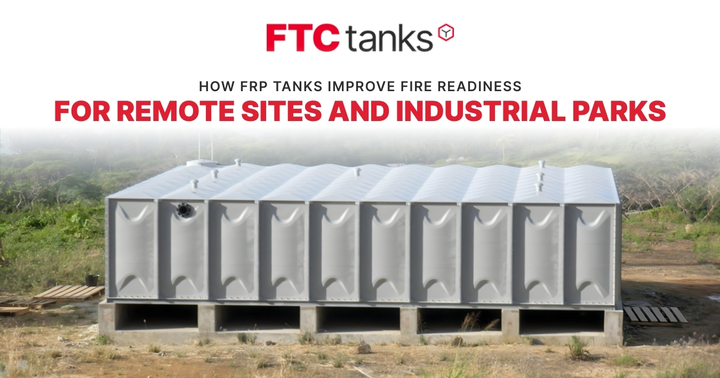
A fire water tank or water cistern built with FRP offers a stable and long-lasting reservoir. The cistern handles long dry seasons, rough terrain, and thermal stress. They hold large volumes without degrading.
For construction staging areas, worker camps, manufacturing zones, solar farms, or oil and gas blocks, an FRP-based water storage setup ensures a dependable supply for both daily operations and emergencies.
Real-World Fire Water Tank Use Cases
Mining and Resource Projects
These sites are isolated. Temperatures swing sharply. Heavy equipment operates nonstop. An FRP water storage tank provides reliable fire protection where supply lines do not exist.
Industrial Parks
Many parks manage their own fire loops. A central fire water tank system must stay stable for years. FRP water tank ensures low downtime and easier long-term planning.
Construction Sites and Temporary Camps
Portable and fast-to-install FRP water tanks let contractors meet fire codes quickly. When the project wraps up, the tank can be relocated for the next job.
Utilities and Power Facilities
Electrical assets need guaranteed water availability during emergencies. FRP tanks deliver consistent performance without the risk of internal corrosion.
The Long-Term Value for Owners and Operators
FRP tanks often last decades. Their maintenance needs stay low. Their structural qualities stay consistent even under tough site conditions. This translates into fewer shutdowns, fewer emergency repairs, and lower total cost of ownership.
Fire readiness is not just about meeting code. It is about protecting your investment, keeping teams safe, and reducing risk. An FRP fire water tank gives owners that edge.
Closing Notes
Remote sites and industrial parks cannot depend on municipal systems. They need their own fire protection infrastructure, and it begins with a resilient, engineered fire water tank.
FRP tanks deliver strength, stability, and long-term confidence. From corrosion resistance to faster installation and lower lifecycle costs, they stand out as the smarter choice for demanding environments.If you’re planning a new industrial site or upgrading fire water storage infrastructure, FTC Tanks offers engineered FRP solutions built to handle tough conditions and strict fire safety expectations. Our team works closely with contractors and engineers to deliver water storage tanks that match the environment and the project timeline.