Over the last decade, the expectations placed on a fire water tank have quietly changed. Codes are stricter. Climate conditions are harsher. Budgets are tighter. And the tolerance for surprise maintenance has dropped to nearly zero. Municipalities, industrial operators, and commercial site owners are starting to ask a simple question that didn’t come up as often before.
Is the steel tank we’ve always used still the right answer?
More often than not, the answer is no. And that’s where FRP fire water tanks are stepping in.
The Quiet Problems with Traditional Steel Fire Water Tanks
Steel tanks didn’t become popular by accident. For a long time, they were the most practical option available. Strong. Familiar. Widely accepted.
But familiarity doesn’t stop corrosion.
Anyone who has managed a steel fire water tank for more than a few years starts to see the same issues appear again and again.
- Corrosion is inevitable: Even with coatings and liners, steel reacts to moisture over time. It’s not a question of if, only when.
- Coatings and liners don’t last forever: Protective layers wear down, peel, or separate. That means inspections, touch-ups, and eventual replacement.
- Maintenance becomes routine, not occasional: Paint schedules turn into ongoing maintenance calendars. Small repairs pile up until they demand major attention.
- Downtime is hard to avoid: Draining a fire water tank for repairs is never ideal, but aging steel systems often make it unavoidable.
- Installation is heavy and slow: Steel tanks require large foundations, specialized lifting equipment, and longer construction timelines.
- Repairs are disruptive and expensive: Once installed, steel tanks are not easy to modify or fix without impacting fire protection readiness.
- Extreme environments accelerate failure: Cold causes coatings to crack. Heat speeds up degradation. In seismic zones, rigidity becomes a risk.
These aren’t rare edge cases. They’re everyday ownership realities. And they’re the reason more project teams are quietly stepping away from steel and looking for better long-term options.
So What Exactly Is an FRP Fire Water Tank?
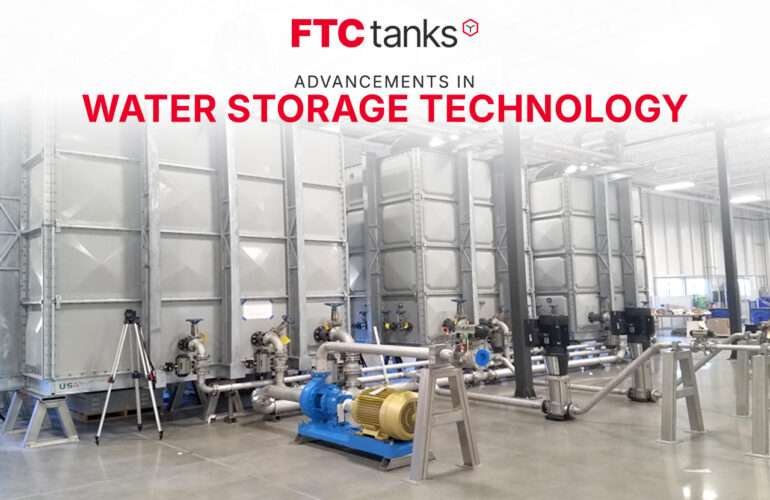
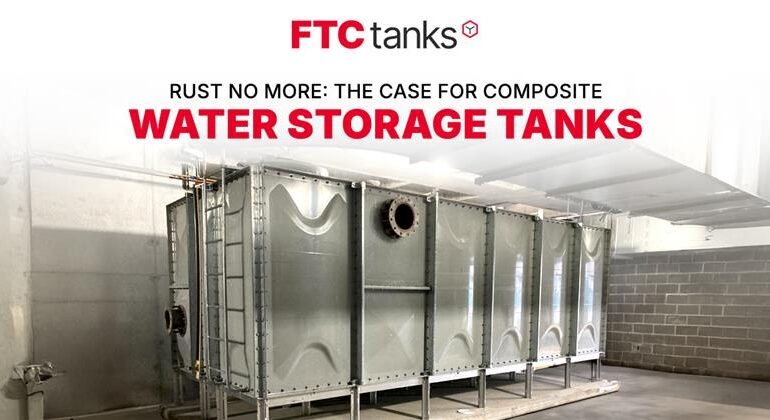
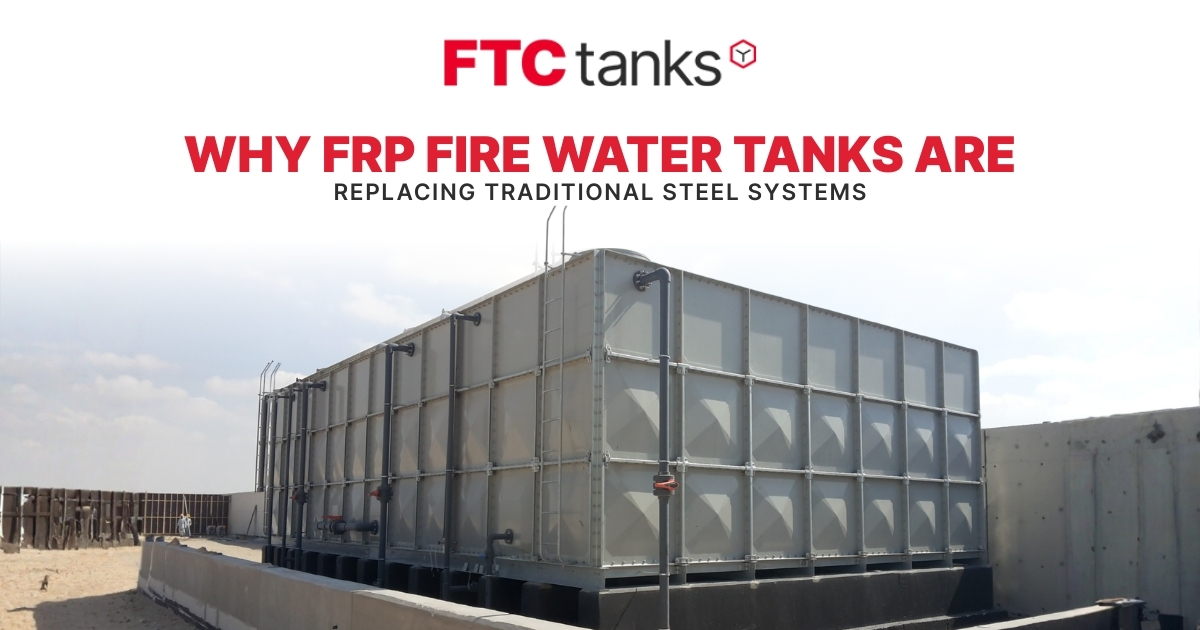
An FRP fire water tank is built from fiberglass-reinforced polymer panels. Instead of relying on welded steel shells, the tank is assembled from modular components that lock together on site.
The material itself does most of the work. FRP water tank doesn’t rust. It doesn’t need paint. It doesn’t depend on liners to protect it from the water it holds.
Most water tanks are designed as atmospheric pressure tanks, not pressurized vessels. That distinction simplifies a lot. The tank relies on gravity and structural integrity rather than internal pressure, which reduces stress on the system and lowers the risk of failure.
FTC Tanks, for example, focuses entirely on this approach. Their systems are above-ground only, atmospheric pressure only, and built around predictable performance rather than added complexity.
It’s not flashy. It’s practical.
Why FRP Is Replacing Steel, One Project at a Time
There are myriads of reasons. Let’s have a look at some of the most prominent ones:
Strength Without the Weight
One of the first things engineers notice about FRP is how strong it is relative to its weight. FRP panels offer a higher strength-to-weight ratio than steel, which changes how the entire system behaves.
These tanks are built with an 8x safety factor against bursting pressure, yet they place far less demand on foundations. Compared to traditional steel cistern designs, the structural load is significantly reduced.
That matters on constrained sites. It matters in retrofit projects. And it matters when timelines are tight.
Installation That Doesn’t Take Over the Site
FRP water tank installation is refreshingly straightforward.
Panels are assembled on site using basic tools. Impact guns. Sockets. Sealant. Scissors. No welding. No curing time. No waiting for coatings to dry.
Foundations can be concrete, but they don’t have to be. Many projects use W14 or W18 steel beams instead, which reduces civil work and speeds things up.
Less construction time means less disruption. It also means fire protection systems can come online sooner, which is never a bad thing.
Built for Places Where Steel Struggles
FRP tanks perform well in places that tend to expose steel’s weaknesses.
In cold regions, the material holds up without becoming brittle. In hot climates, it doesn’t suffer the same accelerated surface breakdown. In earthquake-prone areas, slight flexibility helps absorb movement rather than resist it until something gives.
That adaptability is one of the reasons FRP water storage tanks are showing up more often in challenging geographies. They don’t need ideal conditions to perform well.
Fire Protection Isn’t Optional, and Neither Is Compliance
Fire water storage isn’t just another line item. It’s governed by strict standards for a reason.
NFPA Water Tank requirements exist to ensure tanks will perform during emergencies, not just pass inspections. FRP fire water tanks are designed with NFPA 22 compliance in mind from the start, rather than adapted after the fact.
Fire protection storage falls under Division 21, which governs fire suppression systems. FRP tanks designed for this purpose fit cleanly within that framework.
Because they operate at atmospheric pressure, they also simplify system approvals. Fewer pressure variables mean fewer questions during review.
Certifications Still Matter, Even for a Fire Water Tank
It’s easy to assume that certifications only apply to drinking water. In reality, many sites use shared infrastructure, where a tank may serve more than one purpose.
That’s where NSF certified water tanks come into play.
NSF/ANSI 61 certification confirms suitability for potable water. NSF/ANSI 372 ensures materials meet lead-free standards. Together, they allow FRP tanks to function safely in mixed-use environments where a water cistern might support both fire protection and daily operations.
Even when a tank is dedicated to fire protection, these certifications add a layer of confidence and reduce future limitations.
Maintenance That Mostly Doesn’t Exist
This is where FRP quietly outperforms steel.
There’s no liner to inspect. No coating to repaint. No corrosion to monitor. The interior surface discourages algae growth, which improves water quality and reduces cleaning needs.
Inspections become simpler. Maintenance becomes predictable. Over time, those differences add up.
Compared to steel cistern water storage systems, FRP tanks tend to cost less to own, not because they have a lower upfront cost, but because they demand less attention year after year.
Where FRP Fire Water Tanks Make the Most Sense
FRP tanks are commonly used for:
- Fire protection systems
- Potable water storage
- Rainwater harvesting
- Cooling water
- Stormwater management
- And many more..
They work well across multiple applications, provided the environment isn’t chemically aggressive. That limitation is important, and it’s worth acknowledging upfront.
Used in the right conditions, FRP tanks are versatile without being overextended.
The Direction Fire Water Storage Is Heading
The move away from steel isn’t sudden, but it’s consistent. Project by project, FRP fire water tanks are replacing traditional systems because they solve problems people are tired of managing.
They last longer. They demand less. They align better with modern codes and real-world conditions.
Fire protection infrastructure doesn’t need to be complicated. It needs to work. More often now, FRP is the material that makes that possible.
For teams planning new fire protection systems or reassessing aging steel tanks, manufacturers like FTC Tanks reflect where the industry is headed. Their exclusive focus on above-ground water tanks shows a shift toward simpler designs, easier maintenance, and long-term reliability without unnecessary add-ons.
It’s not about changing materials for the sake of change. It’s about choosing systems that stay dependable long after installation day is over.