Walk around any new construction project today and you’ll feel a real shift in the way buildings are being designed. Sustainability isn’t treated as a bonus feature or a last-minute add-on anymore — it’s woven into the foundation of almost every decision developers make. From high-rise buildings in crowded cities to boutique resorts tucked away on remote coastlines, the focus has moved toward long-term thinking:
- How do we save water?
- How do we cut energy use?
- How do we build with materials that actually last?
- How do we reduce our footprint instead of expanding it?
What most people don’t realize is that one of the unsung heroes of this entire sustainability effort is hidden out of sight. It’s the water storage system. And that’s exactly where the FRP water tank starts to play a much bigger role than anyone expects.
Why FRP Tanks Are Becoming a Green-Building Essential
Green building standards, like LEED, Estidama, BREEAM, and even local building codes, reward materials and systems that reduce environmental impact across their entire lifecycle. Traditional tanks made of steel or concrete simply don’t fit that model anymore. They corrode, crack, and require repeated maintenance, coatings, and replacements.
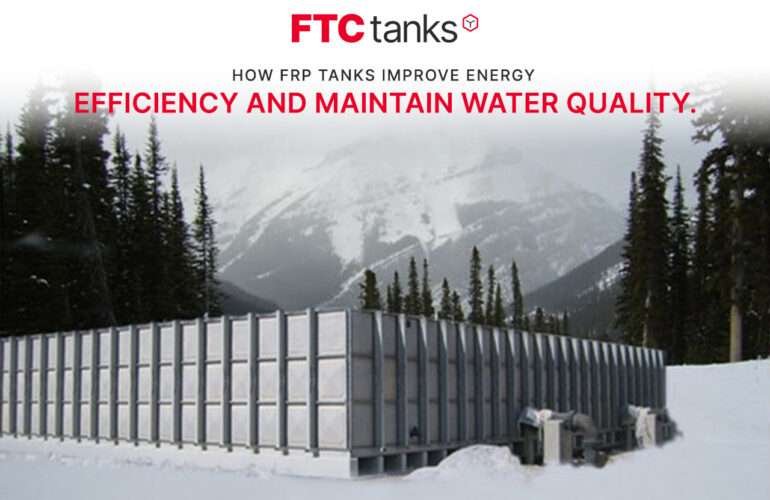
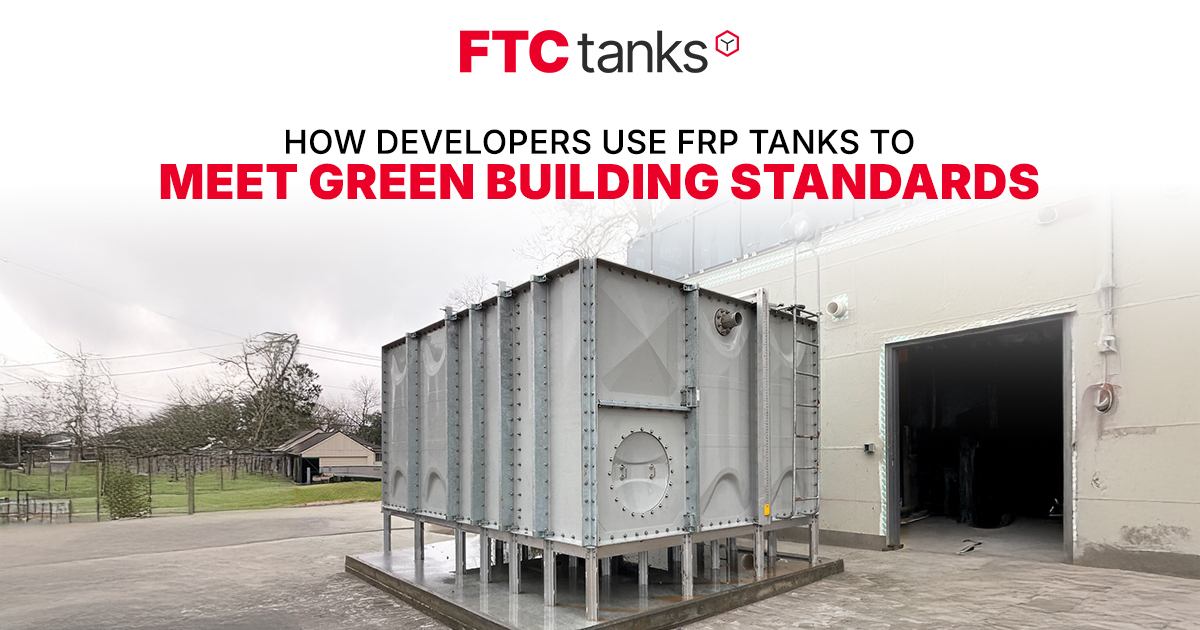
FRP tanks (fiberglass reinforced and built to last) offer a strength-to-weight balance that traditional materials can’t match. They don’t rust, they don’t break down in tough climates, and they don’t need constant upkeep.
These tanks last 40+ years, reducing the chances of waste generation, re-installations, or expensive refurbishments down the line. For developers focused on sustainability, that kind of durability and low maintenance is a major advantage.
Water Quality Protection: A Must-Have for Green Certifications
Most sustainability frameworks place significant emphasis on water quality— not just water supply. Buildings need storage systems that keep potable water safe over time, even in regions with extreme heat.
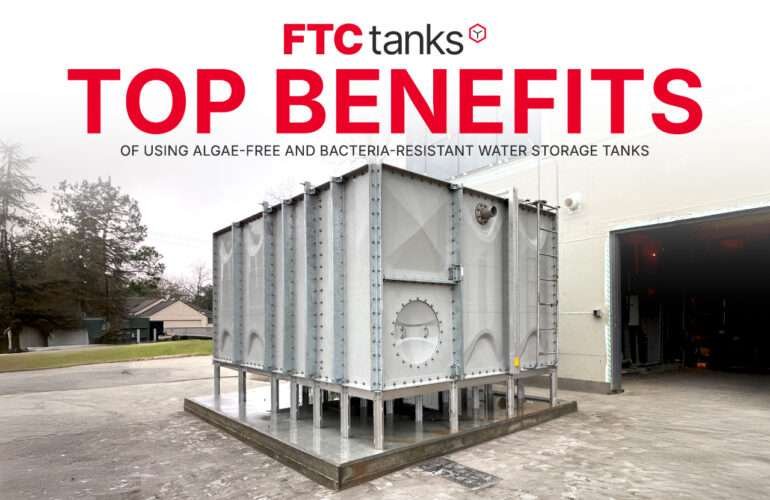
This is where FRP water tanks excel. Their smooth, non-porous inner surface prevents biofilm, algae, and bacterial growth. No strange odors. No chemical leaching. No contamination from rust.
For developers working on hotels, schools, hospitals, or residential communities, NSF certified water tanks made from FRP are the preferred choice because they meet strict hygiene requirements for drinking water.
In hot climates, the stability advantage is even more important. FRP has a naturally low thermal expansion rate, preventing stress cracks that could compromise water purity. This is why many architects now specify FRP solutions for cistern water storage and rainwater harvesting systems.
Why FRP is the Ideal Material for Water Cistern Systems
Green buildings increasingly incorporate rainwater or greywater reuse systems. Capturing, storing, and reusing water earns valuable points under most certification programs.
FRP tanks are ideal for water cistern setups because:
- They keep stored water stable and hygienic.
- They don’t corrode under tough weather.
- They’re modular and easy to install, even in tight basements or rooftop spaces.
- They’re far lighter and more transport-friendly than concrete.
Developers love the flexibility. Whether it’s a small cistern water storage tank for a villa or a large-capacity system for a commercial complex, FRP panels can be configured to almost any dimension.
Fire Protection: A Sustainability Requirement People Often Miss
Even the greenest buildings need dependable fire protection, and this is another area where composite tanks outperform traditional ones. A building’s fire water tank must always be ready for emergency use. If the tank corrodes or the water becomes contaminated, the entire fire system is at risk.
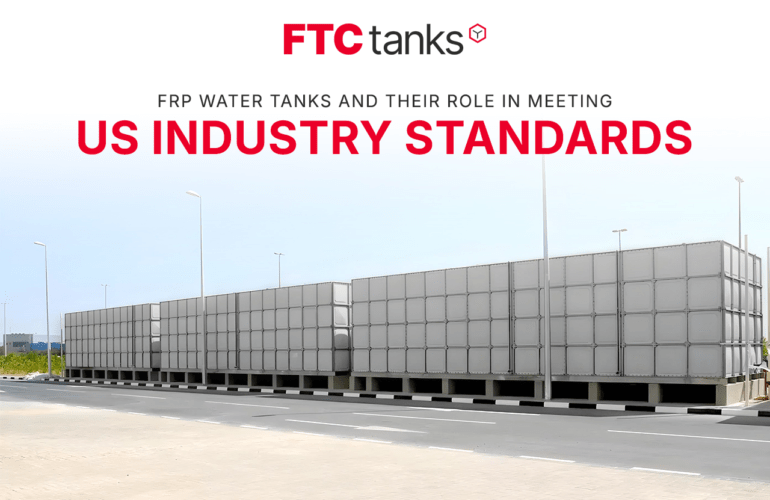
FRP is non-corrosive and maintains water clarity without sludge or sediment buildup. It’s also engineered to meet NFPA Water Tank standards when used in fire protection systems. For developers, that means two wins:
- Meeting fire safety compliance.
- Avoiding unnecessary maintenance materials, coatings, and repairs — another sustainability contribution.
Resilience Matters: Seismic Safety & Structural Performance
In the U.S., especially in quake-prone places like California, Oregon, and Washington, developers have to think about how well every part of a building handles movement. FRP tanks do well here because their panel-based design gives them a little flexibility. Instead of cracking when the ground shifts, they absorb and spread out the stress.
For builders working in these regions, choosing an FRP water tank isn’t just about meeting code; it’s about knowing the system will hold up when it counts.
Installation Efficiency: A Quiet Sustainability Advantage
Sustainability isn’t just about how a system performs — it’s also about how it’s built. FRP panel tanks require fewer heavy trucks, fewer cranes, and fewer job-site disruption than concrete tanks. They’re assembled on-site, which reduces:
- Noise pollution
- Dust
- Emissions from heavy equipment
- Construction waste
For urban infill projects or ecologically sensitive sites, this low-impact installation process is another reason FRP tanks check the “green” box.
Where Developers Are Using FRP Today
These water cistern solutions are extremely popular in:
High-rise towers:
FRP water tanks supply potable water, handle greywater, and act as rooftop or basement cisterns.
Commercial buildings and factories:
They’re used for fire protection, process water, and emergency reserves.
Eco-resorts and remote communities:
Lightweight transport and long-term durability make FRP the most practical option.
Across all these applications, the common thread is clear: FRP water tank help developers meet green-building goals without compromising quality, safety, or performance.
To Conclude.
Sustainability has completely reshaped how we build — and yes, that even includes the parts no one ever sees, like the water tanks hiding behind walls or tucked into basements. FRP tanks have become the go-to solution because they simply do the job better: cleaner water, less upkeep, stronger performance, and a lifespan that leaves steel and concrete in the dust. Whether you need potable water storage cistern water storage, or a reliable NFPA Water Tank for fire protection, FRP tanks consistently come out on top.Looking for a trusted provider? FTC Tanks delivers high-quality FRP solutions built for longevity, safety, and sustainability. Reach out to us today, and let’s build with a tank that’s ready for the future.