Water Cisterns for Commercial Buildings: Above-Ground Design, Codes and Savings
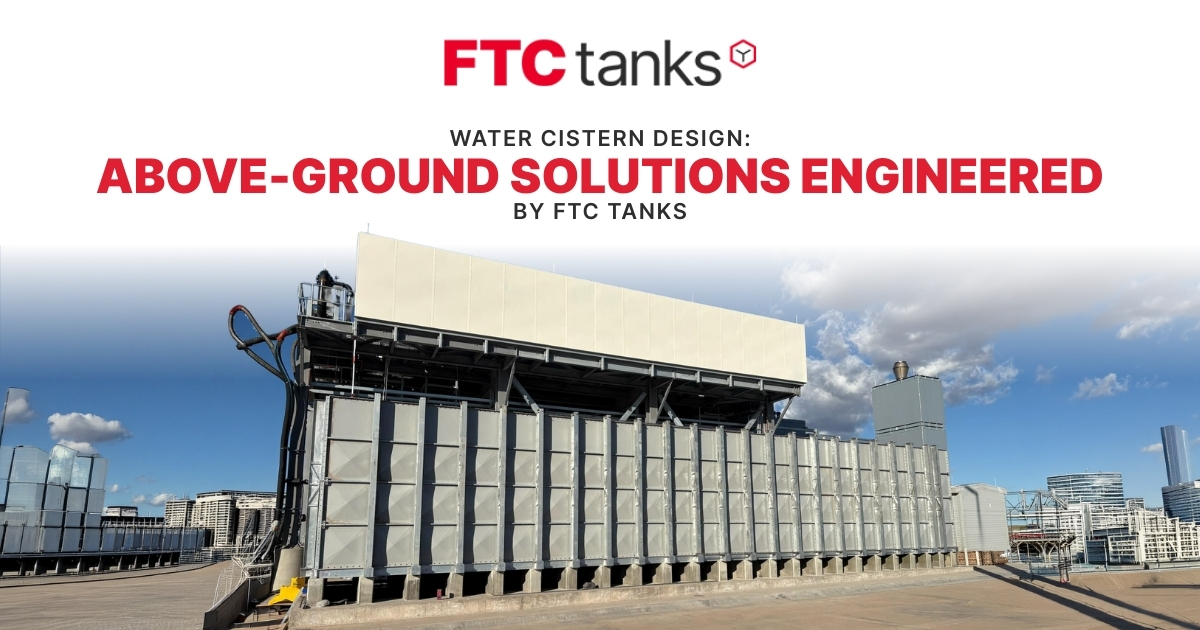
A water cistern is a non-pressurized tank that stores water at atmospheric pressure and supplies fire, domestic, cooling, or reuse systems through pumps or gravity. In commercial buildings, an above-ground cistern sits on a structural slab in a basement, vault, mechanical room, or roof, so crews can inspect it. FTC supplies them as bolted FRP panel tanks.
Last updated: November 11, 2026
Key Takeaways
- A water cistern is a non-pressurized tank that stores water at atmospheric pressure. Pumps or gravity deliver the water.
- Above-ground cisterns carry only the water load inside them and stay accessible for inspection. Buried cisterns must also resist soil pressure and groundwater uplift.
- One building can use cisterns for fire protection, domestic water, HVAC make-up water, rainwater harvesting, stormwater detention, and emergency supply.
- Fire protection cisterns follow NFPA 22 and local code. The authority having jurisdiction (AHJ) gives final approval.
- Bolted FRP panels do not rust and can be assembled inside basements and mechanical rooms.
- Reuse savings depend on local water prices, demand, and treatment. Estimate them before you design.
Planning a cistern for a new build or retrofit? Send your volume, location, and access dimensions. We reply with a free quote and CAD and Revit drawings. → Get a Free Quote
What Is a Water Cistern, and How Is It Different from a Water Tank?
A water cistern is a non-pressurized storage system. It holds water at atmospheric pressure and relies on pumps, gravity, or other equipment to deliver the flow and pressure a building needs. It is not a pressure vessel.
In everyday use the terms overlap. “Tank” is the broader word. “Cistern” usually means storage that supplies other systems, and it is often linked to rainwater or buried storage. Engineers increasingly separate buried tanks from above-ground cisterns installed on a slab inside or outside a building. This guide covers above-ground cisterns.
Above-Ground vs Buried Water Cisterns
| Above-ground cistern | Buried cistern | |
| Loads | Internal water load only | Water load plus soil pressure and groundwater uplift |
| Inspection | Walls and seams can be seen | Hard to see; leaks are hard to detect |
| Repairs | Direct access | Often disruptive (excavation) |
| Typical locations | Slab, basement, vault, mechanical room, roof, outdoors | Below grade |
| Authority review | Clear access for inspection | Added structural and groundwater review |
| FTC supply | Yes | No. FTC tanks are not designed for soil or groundwater loads. |
Site conditions, local code, and your engineer decide which type fits. Buried storage can be the right choice where space or appearance demands it. When a cistern can sit above ground, inspection and maintenance are simpler.
Where to Install an Above-Ground Water Cistern
Basements
In high-rise and urban buildings, the cistern often sits in the basement, supported by the building slab. From there it can serve fire protection, domestic water, and HVAC. See our high-rise building solutions.
Mechanical rooms
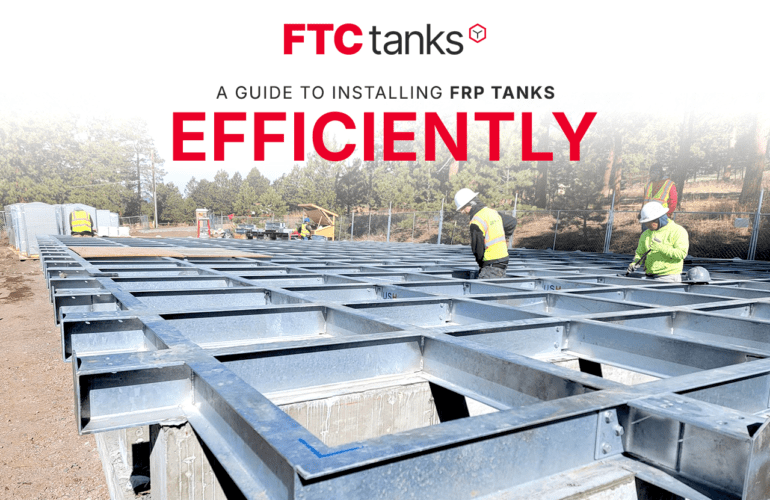
Placing the cistern near pumps, heat exchangers, and controls shortens piping. Bolted panels can be assembled in tight rooms where a one-piece tank cannot fit. See the step-by-step installation guide.
Vaults
Dedicated fire or domestic water rooms work well. The cistern stays accessible and serviceable.
Roofs and upper floors
Roof installations suit gravity-fed systems or sites short on space. The structure must be designed for the load, wind, and seismic forces. See seismic-resistant water tanks.
What a Water Cistern Is Used For
| Use | What the cistern does | Check first |
| Fire protection | Feeds sprinklers, standpipes, and fire pumps when the public supply is weak | NFPA 22, 13, 20, 25 and the AHJ. See our fire water tank guide |
| Domestic water | Buffers supply for hospitals, labs, and institutions | Potable-contact materials such as NSF/ANSI 61; plumbing code |
| HVAC and process | Stores cooling, process, or make-up water next to the equipment | Insulation, piping layout, pump location |
| Rainwater harvesting | Collects roof runoff for reuse | Treatment, freeze and contamination protection, local reuse rules |
| Stormwater detention | Holds runoff inside the building envelope | Local stormwater rules |
| Emergency and process backup | Gives mission-critical sites a dedicated reserve | Duration, refill, pump power |
One cistern, several systems
Modern buildings often draw several services from one cistern. Multi-compartment designs keep volumes separate, so a fire reserve stays protected. Check the design with the AHJ and your plumbing code. See our work for hospitals and data centers.
Codes and Standards for Water Cistern Design
| Standard or code | Why it matters |
| NFPA 22 | Private fire protection tanks. Covers structural integrity, access, drainage, outlet, and seismic topics. |
| NFPA 13 / 20 / 25 | Sprinkler demand, fire pumps, and inspection and maintenance |
| AWWA D121 | Bolted aboveground FRP panel-type water tanks |
| NSF/ANSI 61 and 372 | Materials in contact with drinking water. FTC lists both for its tank materials; ask for the certificate for your project. |
| ASCE 7 / IBC | Seismic, wind, and snow loads |
| Plumbing and mechanical codes | Connections, overflow routing, and backflow prevention |
| Local fire code and AHJ | Final approval for fire protection use |
Coordinate the structure early
A cistern is part of the building structure. Water weighs about 8.34 lb per gallon, so a 10,000-gallon cistern holds about 83,400 lb of water. Slab loading, anchorage, and seismic design should be settled in design, not at the end.
Materials: FRP vs Steel vs Concrete
| FRP (bolted panels) | Steel | Concrete | |
| Corrosion | Does not rust | Needs coatings, painting, or lining, and ongoing corrosion management | Cracks and can leak over time |
| Weight | Light panels | Heavy | Very heavy |
| Installation | Bolted on site, no welding | Welded or bolted; needs crew and equipment | Forms and curing; slow |
| Maintenance | Low; no recoating | Recoating and repair | Sealing and repair |
| Tight or retrofit spaces | Panels carried in and assembled in place | Large pieces are hard to bring in | Built in place; needs space |
This is a general comparison. Details vary by product and project. For service-life data, ask FTC for documentation for your project. See our maintenance-free FRP tank advantages.
Modular Design for Confined Spaces and Future Expansion
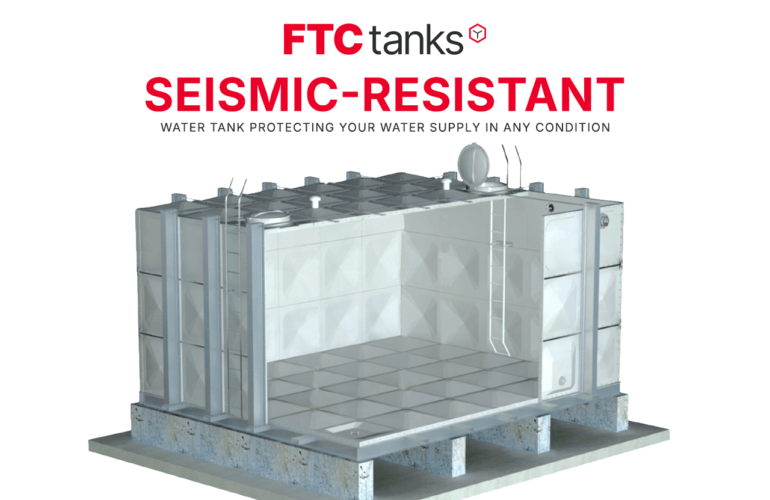
- Panels fit through standard doorways and bolt together in place.
- Compartments can be added for redundancy, so one side can be cleaned while the other stays in service.
- Phased installation and later expansion are possible.
- Custom shapes (for example, L-shaped) fit around obstructions.
See our modular FRP tanks and download BIM and Revit objects.
Design the Cistern as Part of the System
A cistern works with other equipment. Plan these interfaces early:
- Fire pumps and domestic booster systems
- HVAC equipment and controls
- Level controls, control panels, and alarms
- Penetrations, reinforcements, and internal supports
- Overflow routing and backflow prevention
- Coordination across plumbing, mechanical, electrical, and structural teams
Cut Water Costs with Rainwater and Greywater Reuse
Water is a quiet cost in hotels, factories, hospitals, and schools. It goes to cleaning, cooling, flushing, landscaping, and fire safety. Not all of that demand needs treated city water. A cistern lets you store and reuse non-potable sources:
- Rainwater for toilet flushing, washing, cooling make-up, and irrigation
- Greywater from sinks and showers, with treatment where code allows
Where savings can come from:
- Less purchased water when reuse replaces non-potable demand
- Less recoating and repair than steel
- Faster, lower-disruption installation with bolted panels
How to estimate your own numbers:
- One inch of rain on one square foot of roof is about 0.623 gallons, before losses. A 10,000 sq ft roof collects about 6,230 gallons per inch.
- Compare your water and sewer rates, roof area, local rainfall, demand, and treatment cost.
- Use the EPA’s Water Sense guidance for commercial buildings.
Reuse needs treatment and approval under local codes. Savings vary by site.
Water Cistern Specification Checklist
- Use: fire, domestic, HVAC, rainwater, stormwater, emergency
- Working volume and compartments
- Location and access dimensions (doors, corridors, elevators)
- Slab or roof loading and anchorage
- Seismic, wind, and snow loads
- Freeze protection and insulation
- Materials and certificates for the water use
- Overflow, drain, and connections
- Standards cited in the spec and AHJ review
Common Specification Mistakes
- Treating a cistern as a commodity
- Applying buried-tank assumptions to an above-ground design, or the reverse
- Overlooking access, inspection, and cleaning
- Settling slab loading and seismic design too late
- Skipping AHJ review for fire protection use
- Mixing fire and domestic volumes without separate compartments and approvals
Real Projects: Above-Ground Tanks Inside Buildings
Methodist Centennial Tower, Houston, TX
- 50,000-gallon dual-compartment tank in a confined second-floor basement
- Full-drain design and uninterrupted system access during maintenance
- Download the Methodist Centennial Tower case study (PDF)
Memorial Hermann Katy, Katy, TX
- L-shaped tank assembled around structural obstructions
- Five flat panels fabricated and delivered within 24 hours
- Download the Memorial Hermann Katy case study (PDF)
See more installed FRP tanks.
Water Cistern FAQs
What is a water cistern, and how is it different from a water tank?
A water cistern is a non-pressurized tank that stores water at atmospheric pressure and delivers it through pumps or gravity. “Tank” is the broader word, and the two terms overlap. Engineers increasingly separate above-ground cisterns, installed on a slab inside or outside a building, from buried tanks that must resist soil and groundwater loads.
Why choose an above-ground water cistern instead of a buried one?
An above-ground cistern carries only the water load inside it, and you can inspect it, clean it, and repair it directly. Buried cisterns must also resist soil pressure and groundwater uplift, and leaks are harder to find. Site conditions, local code, and your engineer decide which type fits.
Where can an above-ground water cistern be installed in a building?
Common locations are basements, mechanical rooms, vaults, rooftops, and outdoor slabs. Bolted FRP panels can be carried into tight rooms and assembled in place. The floor or roof structure must support the filled cistern, and seismic and wind loads must be checked. Water weighs about 8.34 pounds per gallon.
Can one water cistern serve fire protection and domestic water?
A multi-compartment cistern can keep fire and domestic volumes separate. Whether a combined design is allowed depends on the authority having jurisdiction, the fire code, and the plumbing code. Drinking water needs materials certified for potable contact, such as NSF/ANSI 61. Confirm the design with your engineer early.
Can a water cistern save money through rainwater or greywater reuse?
It can, if reuse replaces non-potable demand such as toilet flushing, cooling make-up water, or irrigation. Savings depend on local water prices, rainfall, roof area, demand, and treatment cost. Rainwater and greywater reuse need treatment and approval under local codes. Use EPA WaterSense guidance to estimate your own numbers.
Get a Free Quote for Your Water Cistern
Tell us your use, volume, and site. We reply with a free quote, CAD and Revit drawings, and submittal support. → Get a Free Quote · Call +1 (703) 339-9605 · Download BIM and Revit objects